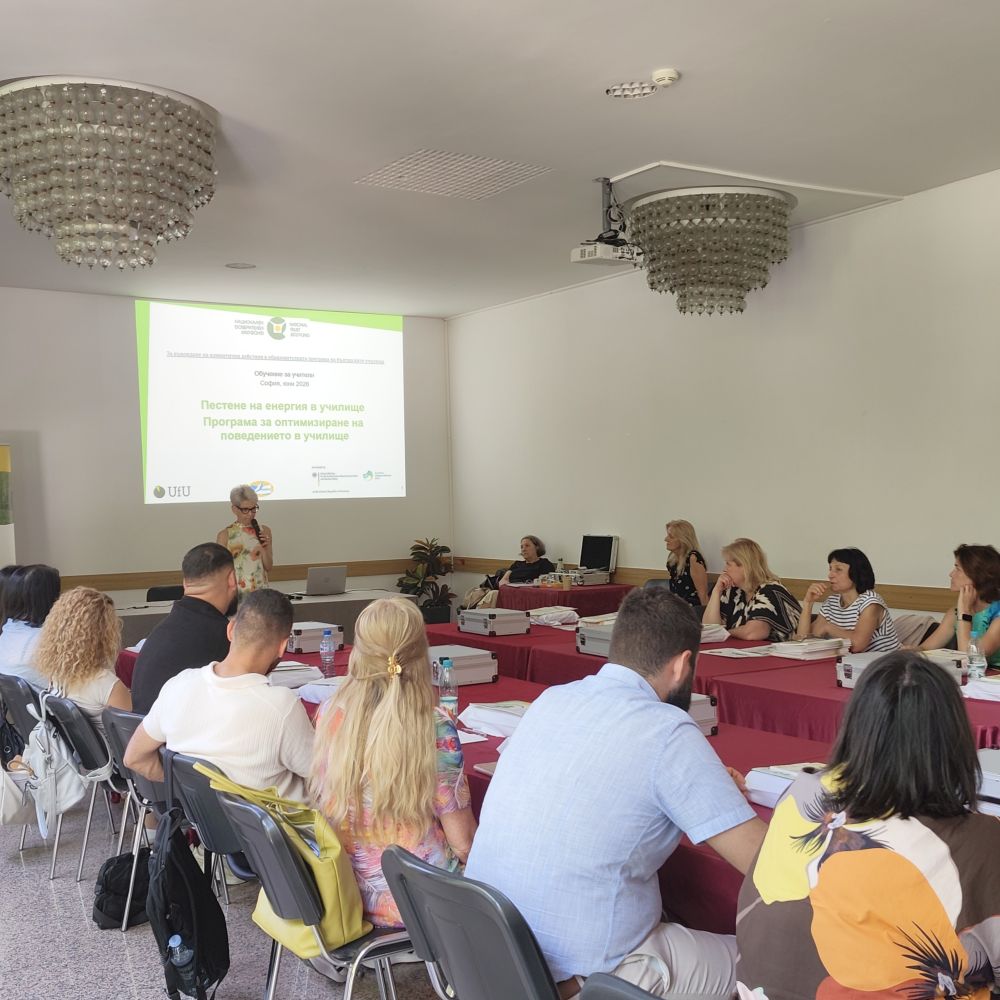

From 29 June to 1 July 2026, the National Trust EcoFund (NTEF) is holding another training programme for teachers who lead school energy teams. The training is part of an original behavioural change programme designed to optimise the way building users consume energy in schools where NTEF provides partial funding for energy efficiency investments.
For the past 15 years, NTEF has been supporting public institutions in improving their energy efficiency, contributing to Bulgaria's national greenhouse gas emission reduction targets. Alongside investment measures, the Fund also promotes behavioural change among building users, significantly increasing the overall energy savings achieved.
The current training brings together teachers from 10 schools that have already been approved for funding to implement energy efficiency measures. During the training, participants gain an in-depth understanding of the programme, which they will introduce in their schools at the beginning of the new academic year through extracurricular activities.
Leading the NTEF trainings are lecturers from Sofia University "Kliment Ohridski" Assoc. Prof. Snezhana Tomova from the Faculty of Biology, Assoc. Prof. Dimitar Zhelev from the Faculty of Geology and Geography, Assoc. Prof. Maya Gaydarova from the Faculty of Physics and Assoc. Prof. Elena Boyadzhieva and Assoc. Prof. Milena Kirova from the Faculty of Chemistry. The training is based on a set of materials for teachers created within the framework of an original Bulgarian program with the support of the German government https://education.ecofund-bg.org/ .
Each teacher will establish a student energy team that will carry out an energy walk around the school to identify opportunities for saving energy. Based on their findings, the students will take action as real energy managers.
And there is plenty of room for improvement. During the winter, classrooms are often heated above the recommended temperature. More lights are switched on than necessary. Electronic devices are left on standby when not in use. Rooms are not ventilated efficiently, and many other everyday habits lead to unnecessary energy consumption.
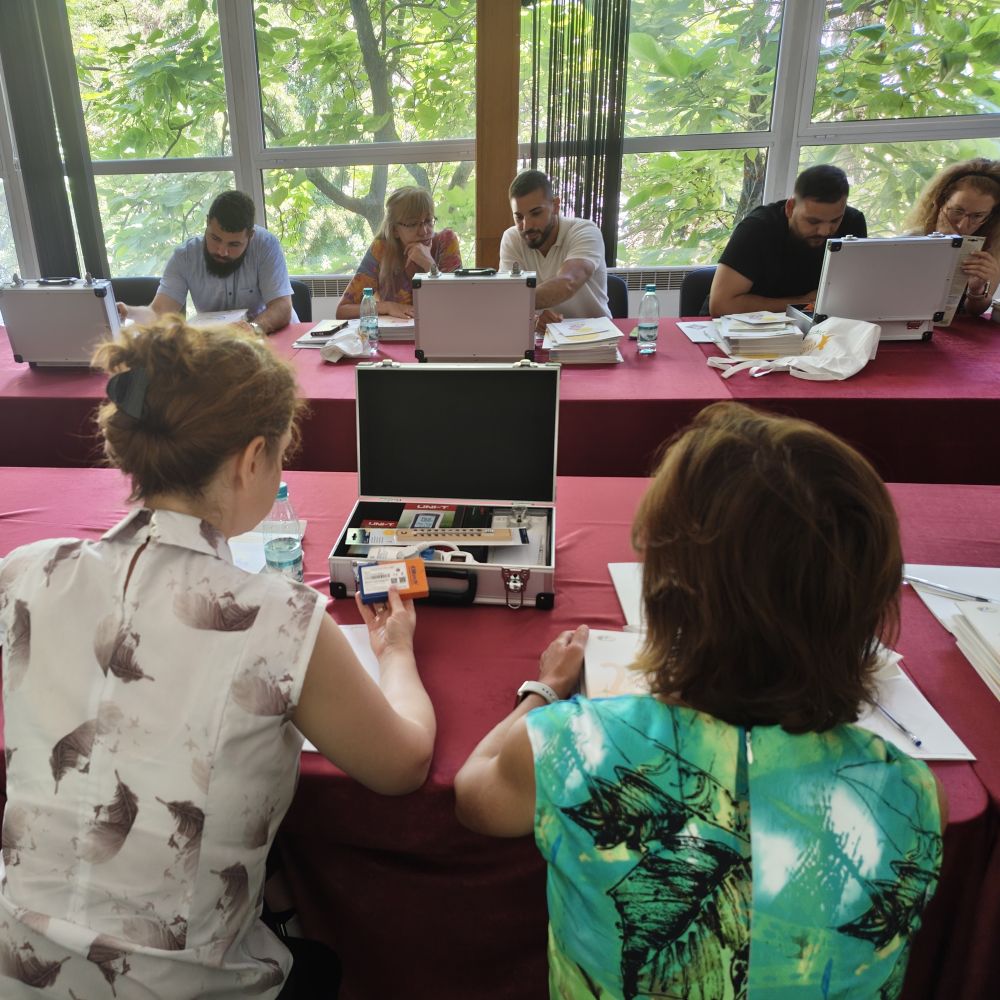
To support their work, NTEF provides every school energy team with a set of measuring instruments, including devices for monitoring light levels, indoor temperature, carbon dioxide concentration, and other environmental parameters. Using these tools, students assess energy use in their school and then work alongside teachers, school staff, parents, and fellow students to improve energy efficiency—just like professional energy managers.
During the first months of implementation, NTEF experts provide on-site support to the newly established school energy teams.
The goal is not for anyone in the school to sit in the cold or in the dark. Instead, it is to ensure that only the amount of energy actually needed is used.
Beyond learning about climate change and energy efficiency, student energy managers develop valuable life skills, including leadership, communication, teamwork, and active citizenship. They also have a great deal of fun throughout the process.
The teachers leading the energy teams remain connected through the programme, forming a nationwide network of educators. For nearly a decade, this network has brought together teachers and their students from across Bulgaria, creating a growing community of climate-conscious and environmentally responsible citizens.